
Python hosting comparisons
A Better Alternative to Heroku for Small Django and Flask Apps
Find a lower-cost Heroku alternative with Python hosting, MariaDB, Redis, SSL, backups, email, SSH, Git, and Cron Jobs included.
Published 2026-07-30 · 7 min read
Heroku makes deployments pleasant, but a small Python application can quickly become a collection of separately priced dyno and data services. A Django or Flask app may need a web process, SQL database, Redis, email, backups, SSL, and scheduled commands.
HostRight is a better Heroku alternative for that workload when predictable bundled hosting matters. Starter is $2.99/month with Python application support, MariaDB, Redis, SSL, daily backups, email, SSH, Git, and Cron Jobs.
How to host Django or Flask on HostRight
Create a Python application, upload the project privately, install its dependencies in the assigned virtual environment, and configure Passenger with the WSGI entry point. Django projects then need database settings, migrate, and collectstatic; Flask projects need the correct WSGI callable and production configuration. Create Redis when the app uses caching, sessions, or queues, and use Cron Jobs for recurring commands. Test DNS and SSL before accepting real traffic.
The result is a complete small Python deployment with web hosting, MariaDB, Redis, scheduled jobs, email, backups, Git, and SSH. See Deploy Python applications and Deploy Django with Passenger for the detailed setup.
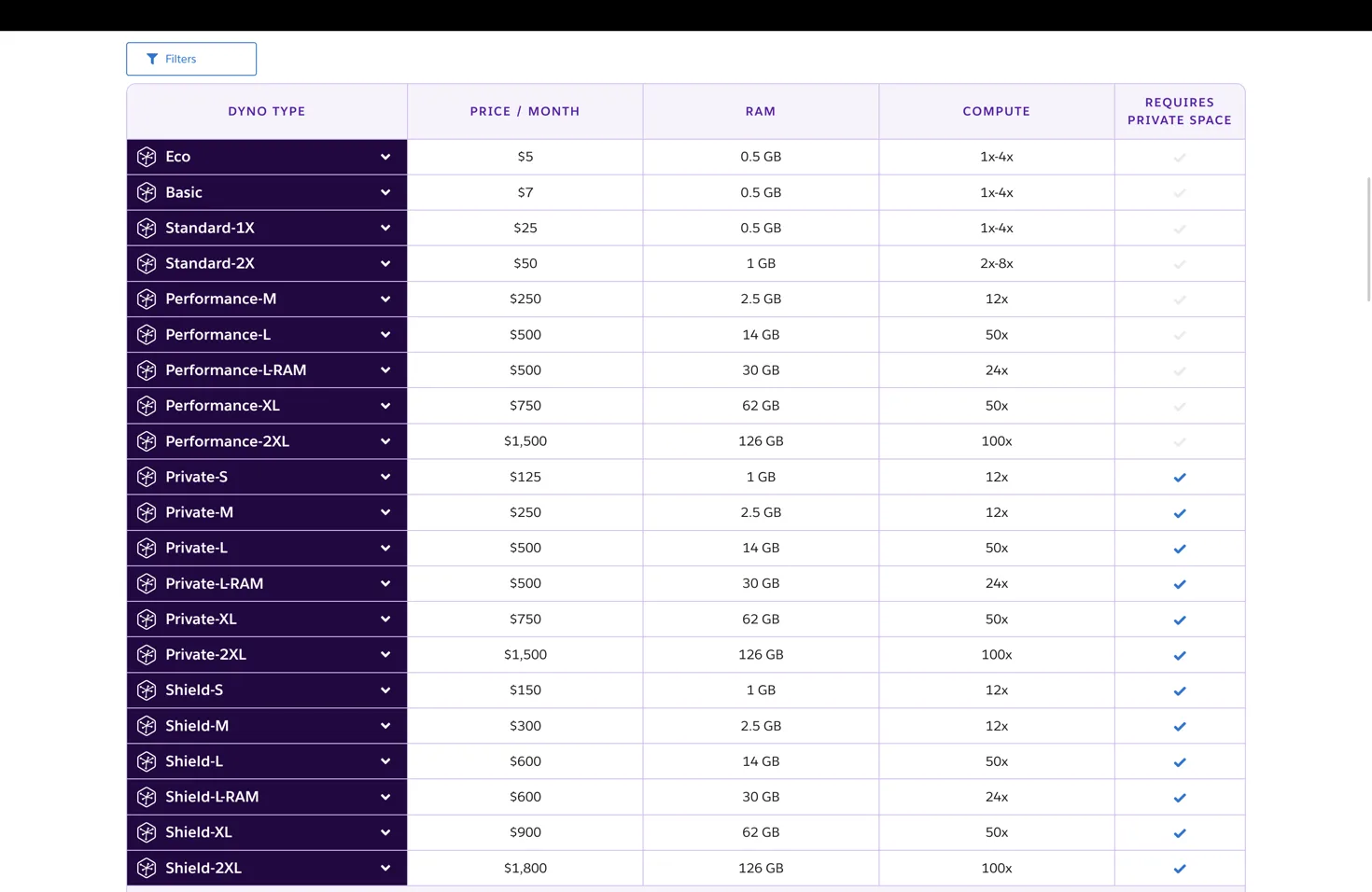
Heroku remains compelling for dyno-based deployment, add-ons, teams, and platform conventions. HostRight is better for a small website, API, admin tool, or early SaaS that does not need independent dyno scaling or a large add-on ecosystem.
Move a Python app without losing the supporting services
Deploy the Django or Flask project to a private application directory, create the Python application in HostRight Control Panel, install dependencies, create the MariaDB database, enable Redis, and move environment variables into protected settings. Run migrations and collect static files over SSH, then create Cron Jobs for scheduled management commands.
For email, decide whether the application sends through a HostRight mailbox or a transactional provider. Preserve the domain's MX, SPF, DKIM, and DMARC records during DNS migration. Enable SSL before accepting credentials or private data.
Cost and capacity trade-off
Heroku's separate dyno and data-service model makes scaling individual components straightforward. HostRight's bundled model makes the first complete deployment cheaper and simpler, but it uses shared account limits. Move to a VPS or application platform when the app needs multiple always-on workers, custom containers, private networking, or sustained high CPU.
Read HostRight vs Heroku for small PHP, Django, and Flask apps and affordable Python hosting for Django and Flask.